Scientific participation in Lausanne combines exposure to emerging trends, visits to specialized institutions, and discussions on joint projects with European and Japanese universities
Sharjah Women’s Sports, represented by the Scientific Center for Research and Sports Development, participated in the 31st Annual Congress of the European College of Sport Science (ECSS 2026), held in Lausanne, Switzerland, from July 7 to 10, 2026, as part of its efforts to strengthen the use of scientific research in developing athlete performance and build international partnerships that support knowledge transfer and its application within the sports environment.
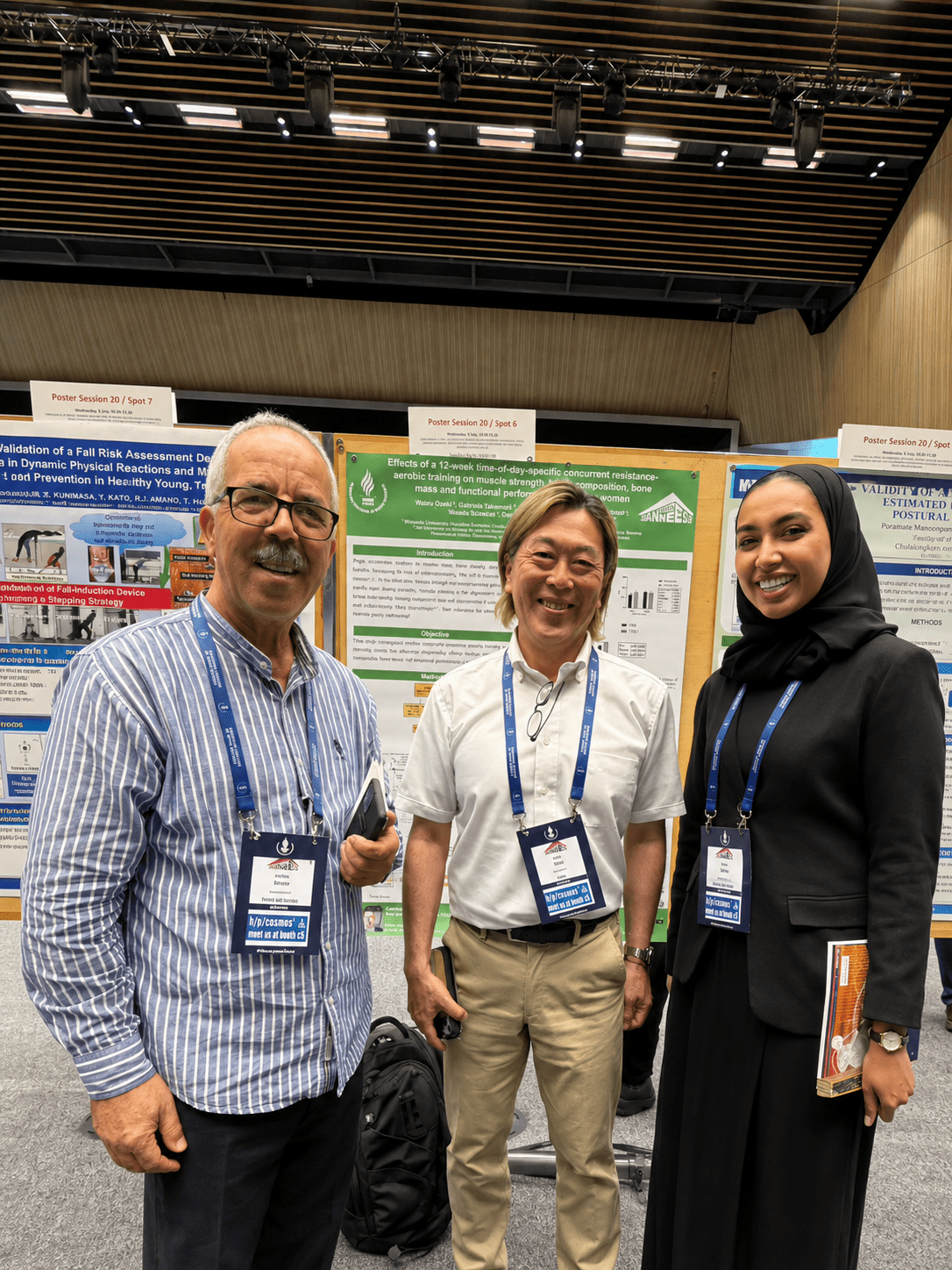
The Sharjah Women’s Sports delegation included Dr. Mokhtar Shattara, Director of the Scientific Center for Research and Sports Development, and Maryam Al Shehhi, Sports Physiologist. Their participation included attending specialized scientific sessions, conducting field visits to leading Swiss institutions and laboratories, and meeting with international researchers to discuss potential joint research and training projects.
The congress attracted around 3,000 researchers, academics, coaches, physicians, specialists, and representatives of sports institutions from around the world, providing a scientific platform to discuss the latest developments in exercise physiology, training science, sports medicine, nutrition, psychology, biomechanics, and data analysis.
The congress focused on the shift toward personalized training programs based on the physiological and biological characteristics of each athlete, as well as the use of artificial intelligence and wearable technologies in performance analysis, training-load management, recovery monitoring, and the early identification of injury risks.
Women’s sport also featured prominently in the discussions, with a focus on the physiological characteristics of female athletes, individual differences in response to training, and the importance of designing evidence-based training and recovery programs that take the needs of female athletes into account.
Connecting Scientific Research with the Demands of the Field
Dr. Mokhtar Shattara said Sharjah Women’s Sports’ participation reflects its commitment to strengthening evidence-based sports practice and developing scientific tools that contribute to improving the quality of athlete preparation.
“The discussions at the congress showed that sports performance development now depends on an integrated system that combines physiological, physical, and psychological assessments, data analysis, and continuous monitoring of training loads and recovery, supporting more precise decision-making,” he said.
“The real value of scientific research lies in its ability to move from the laboratory to the field. Through the Scientific Center, we are working to apply these approaches in developing programs that take individual athlete responses into account and provide coaches and specialists with objective data that helps them improve performance and maintain athletes’ readiness.”
As part of the accompanying program, Dr. Shattara visited the Human Movement and Performance Sciences Laboratory at the University of Lausanne, at the invitation of Professor Grégoire Millet, a specialist in exercise physiology and neuromuscular fatigue, and in the presence of Professor Caroline Nicol of Aix-Marseille University, a specialist in biomechanics and recovery.
The visit included an overview of equipment used for performance assessment, motion analysis, strength measurement, electromyography, and maximal oxygen uptake testing, along with technologies used to assess neuromuscular fatigue and physiological responses to training and competition.
The delegation also learned about research projects related to training-load monitoring, athlete readiness assessment, the development of recovery strategies, and the impact of environmental conditions, such as altitude and temperature, on physical performance.
Exploring the Swiss High-Performance Sports Model
Maryam Al Shehhi visited the Swiss Federal Institute of Sport Magglingen, where she toured high-performance sports facilities, performance physiology laboratories, and physical testing units, and learned about the mechanisms used to provide scientific services to athletes, coaches, and national federations.
She also met with specialists in sports psychology and high-performance sports services and explored programs focused on psychological support, mental health, and women’s sport, alongside a working model based on the integration of sports science, sports medicine, nutrition, psychology, biomechanics, and performance analysis.
“The visit confirmed that athlete development cannot be achieved through a single discipline, but through an integrated system that examines physical, physiological, and psychological needs and connects scientific findings with daily training programs,” Al Shehhi said.
“Research related to women’s sport is receiving growing attention globally, reinforcing the importance of designing training and recovery programs that take into account individual differences and the physiological characteristics of female athletes, while supporting their performance, health, and long-term participation in sport.”
Joint Research and Training Projects
On the sidelines of the congress, the Sharjah Women’s Sports delegation met with Professor Romuald Lepers, Professor of Exercise Physiology at Université Bourgogne Europe in Dijon, as part of the ongoing scientific collaboration between the university and Sharjah Women’s Sports.
The two sides discussed organizing a scientific visit to the UAE in early 2027, featuring lectures and applied workshops focused on strength training, training-load planning, and the development of muscular strength among junior and senior female athletes, while linking scientific evidence with practical applications.
They also discussed launching a joint research project to compare the effects of two different strength-training methods among female athletes, with the aim of identifying the most effective approaches for improving strength and physical performance while taking age and physiological characteristics into account.
The delegation also held a scientific meeting with Professor Keita Kamijo of Chukyo University in Japan, during which the two sides discussed potential joint studies in sports science and human performance, the exchange of research expertise and methodologies, and reciprocal visits between laboratories. These discussions included a potential visit by a Sharjah Women’s Sports team to Japan to explore advanced research equipment and research methods.
Sharjah Women’s Sports’ participation in the congress, together with the accompanying visits and meetings, reinforces its commitment to strengthening the role of the Scientific Center for Research and Sports Development in connecting scientific research with the demands of training and competition, developing national capabilities, and building international partnerships that help transform knowledge into practical applications that enhance athlete readiness and support the sustainability of sporting achievements.